

During February, March and April, it seemed that the unglamorous, fairly invisible but essential jobs just kept going on and on. Steve did his best to make encouraging noises when I showed him photos each time I returned back south, even though I’m sure he was really thinking “what on earth have you been doing all week?!”
The ‘triangles’ in the roof space seemed to take me months to insulate and board out – with plenty of knocks on the head, scraped hands and arms, and twisted limbs to show for my efforts. But they finally got done (for now anyway – until I have to get the final tongue & groove boards and floor coverings on.)
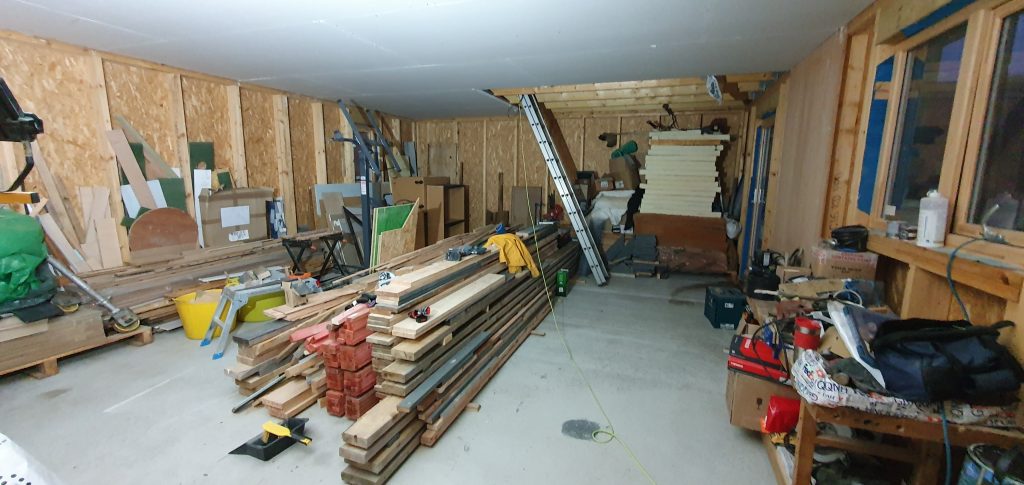
Once the blue boards were all down, next was to get the wool insulation in and the green boards fixed on. Again I was very thankful for my new track saw ‘toy’. The relatively low height of the room also made balancing, and then fixing, pretty heavy 2.4×1.2m boards slightly more straightforward by myself than it would have been otherwise, although the 2 big piles of stacked floorboards were constantly in the way. At last though the sloped ceilings had been transformed to bright green board colour, and beginning to feel cosier with wool inside.
Before I fixed the flat ceiling boards in place, I had to work out how the lighting and electrics would work. With the green boards as the airtight layer, and the requirement for there to be some air gap around the back of the spotlights, I decided to spend a long time constructing ‘boxes’ that the spot lights would fit into. Still not 100% sure what a ‘proper’ joiner would have done (they definitely wouldn’t have spent the time I did!) but eventually I’d worked them out and how the wires would feed through. On the gable ends, I used up the partial roll of Intello airtight fabric that we had left over from the house. It was the right material for the job and also great because I’d reached the end of the green boards (that I’d got for free as they were leftovers from the COP26 House project). Before the Intello went on we also used up some of the leftover Steico Specialdry boards and added an additional insulating layer on the inside of this exposed West side. We’d already put these same boards on the outside of the East gable (and also all over the roof) but didn’t do the outside of the West gable, as the additional 80mm thickness of the boards would have created a step above the garage doors. The room was definitely feeling much cosier.
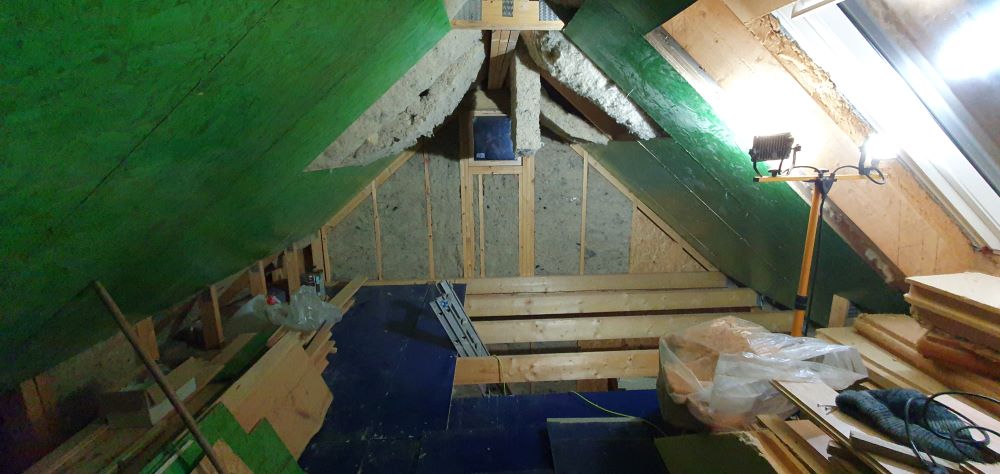
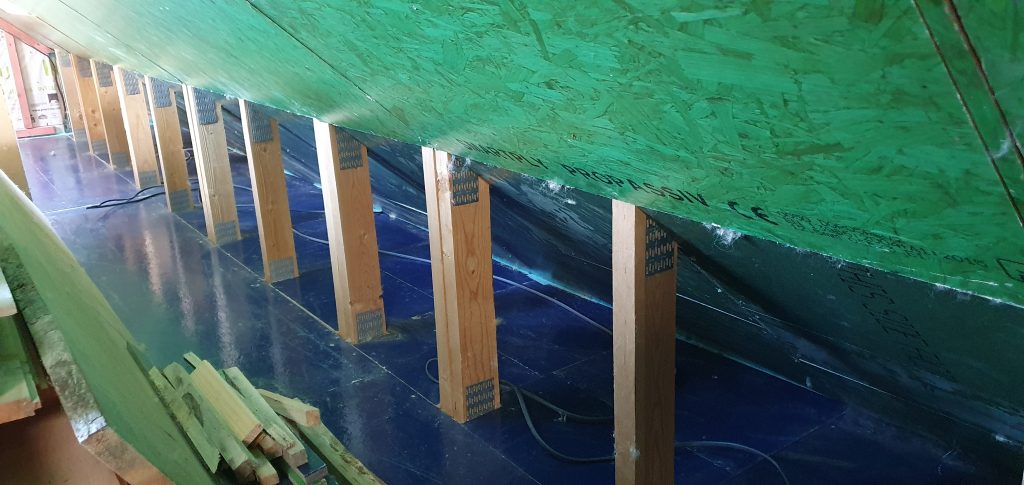
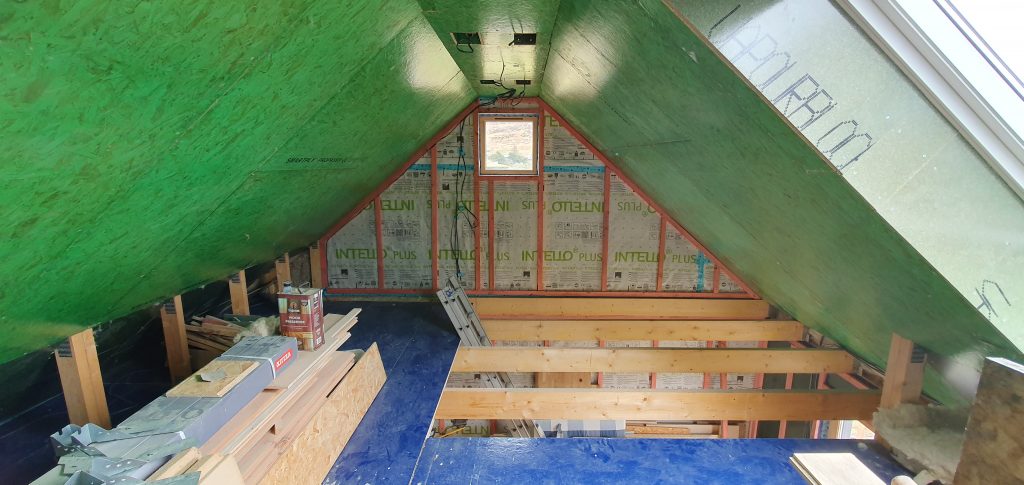
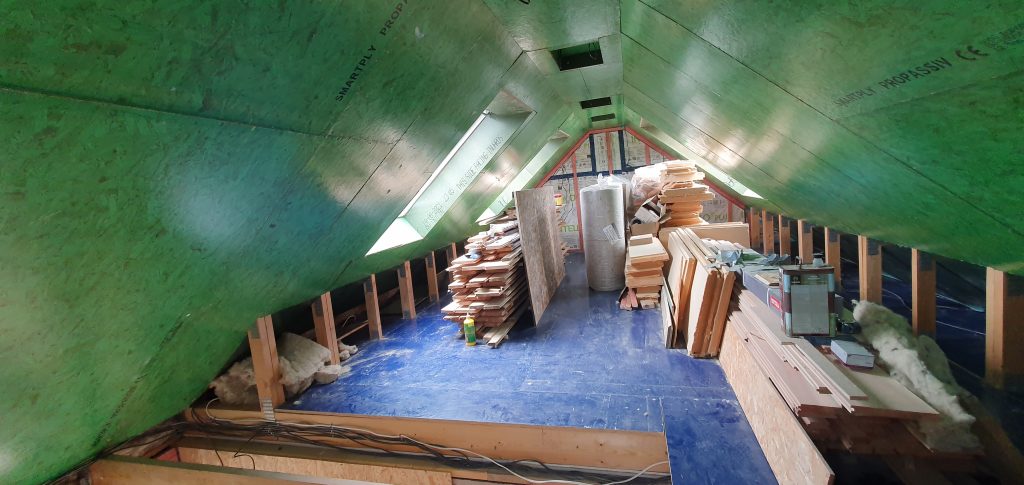
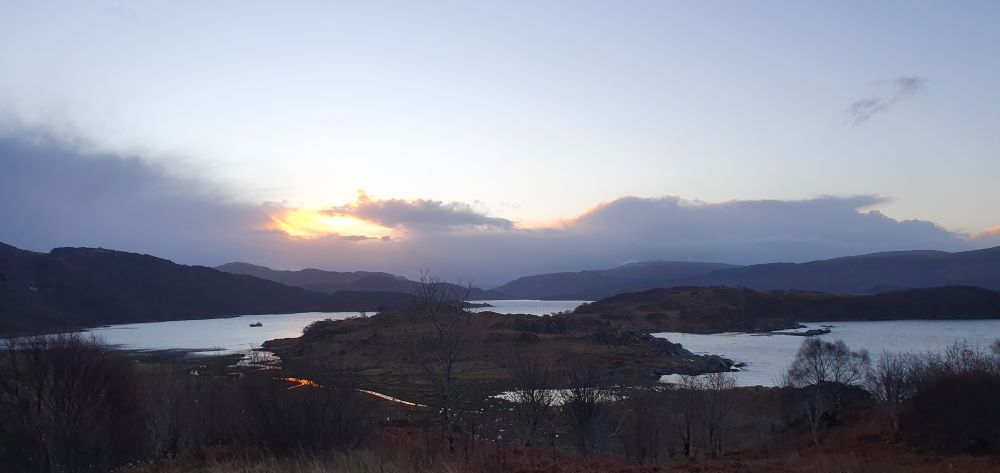
And needless to say, the view is also pretty good!
Creating rooms
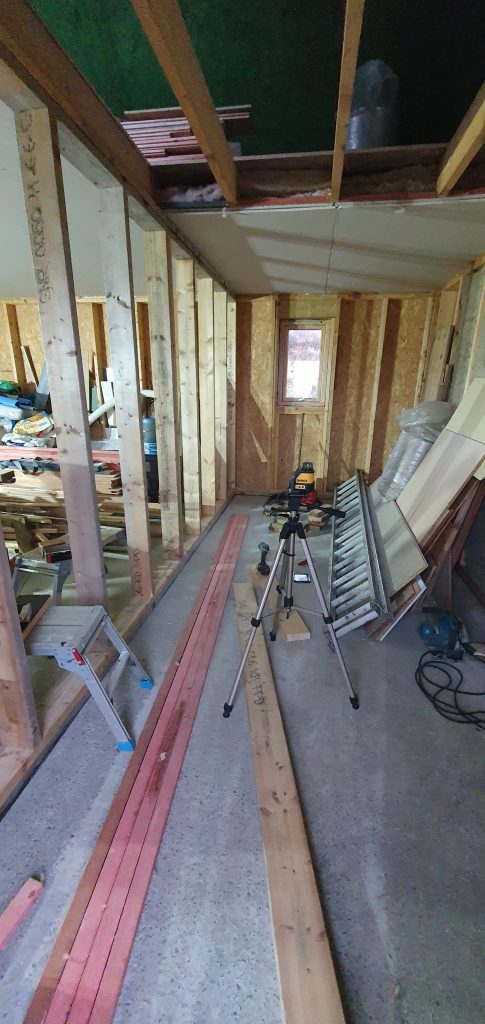
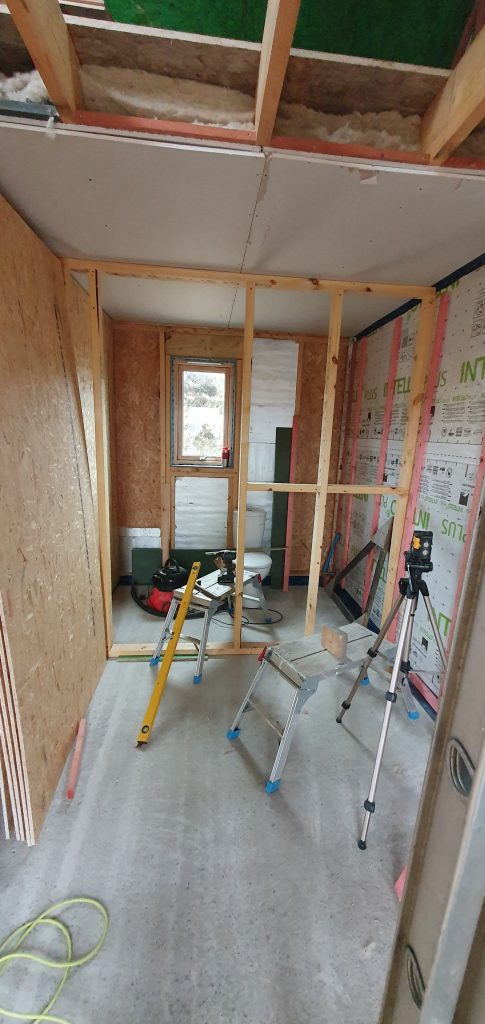
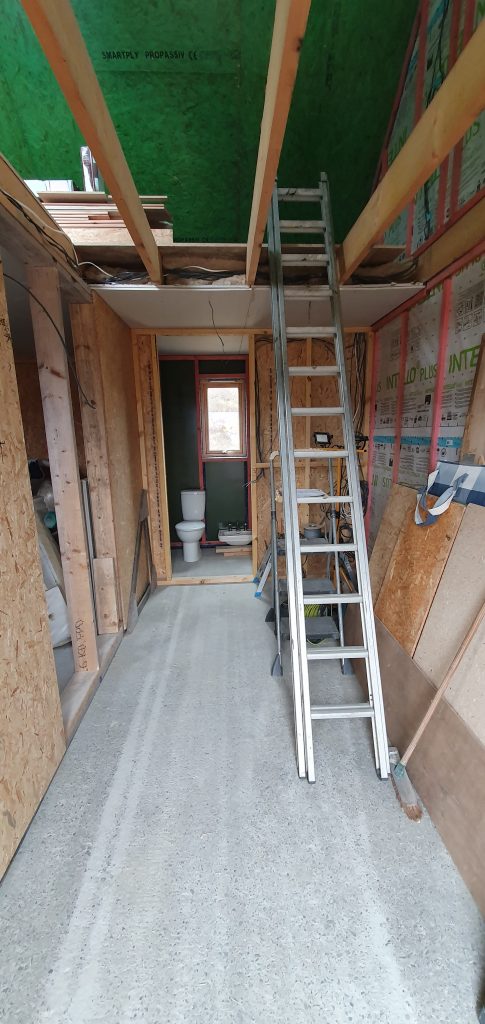
With the upstairs broadly in shape, it was time to split off the downstairs room with stud walls. It was interesting thinking back to when I did my first stud wall in the house a couple of years ago. I still didn’t do a perfect job in the garage, but was so much more confident getting it up, and – most significantly – knowing the work arounds to deal with all the various and inevitable imperfections in the wood. And voila: our one downstairs garage room was transformed into double garage, entrance/kitchen and small shower room – or at least the beginnings of.

Apprentice Electrician
Eventually as the days started getting longer again, with the walls in place we got to the stage when it was time to think about first fix electrics and plumbing. So the experts were called in once again: Neil (electrician) and Nigel (plumber).
After knowing Neil for ‘years’ by now, I’ve finally reached the status of being – sort of – trusted to feed a designated wire through a wall/around a room. This was only after working alongside him on site for a day, and then he very tentatively left me my homework, after drawing up a diagram of what wires needed to go where. I still managed to start feeding an incorrect wire as part of the garage socket circuit. Very fortunately I realised my error before I’d gone too far, so could correct. I think if Neil had been the one to discover it, we’d have been pulling all the cabling I’d done out and he’d have started again. Once again, I did really enjoy learning a new skill – how to do very basic electric wiring. Obviously I am having nothing at all to do with the actual circuit board/ final wiring-in part, but by doing a lot of the initial pulling of wires through walls, and installing all the switch and socket back boxes once I’ve put in the final wall coverings, I will have saved quite a lot of Neil’s time (and our money). It also helped me think about how the garage rooms will be used, where we need sockets and lights etc – definitely suited my logical brain working it out.