
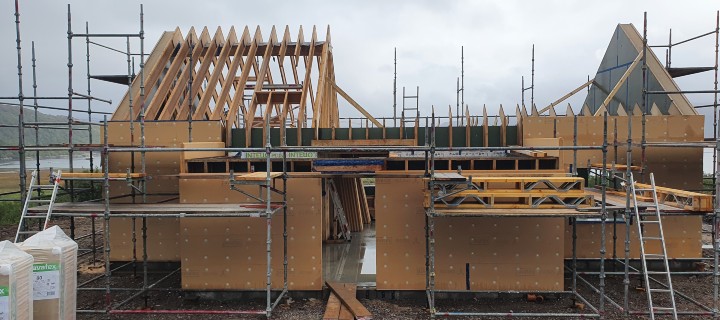
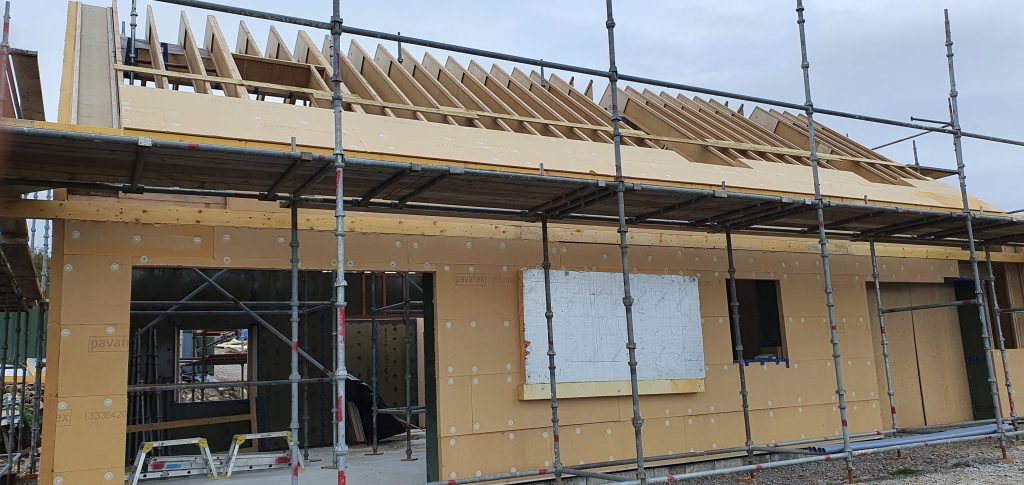
It’s perhaps not exactly how companies market it, but for me when they started to fix the 80mm Pavatex woodfibre boards around the outside walls, it really did feel like the house was being wrapped in a blanket. The boards have tongue and groove on all sides so they slot together easily without airgaps, providing another significant layer of insulation for the house.
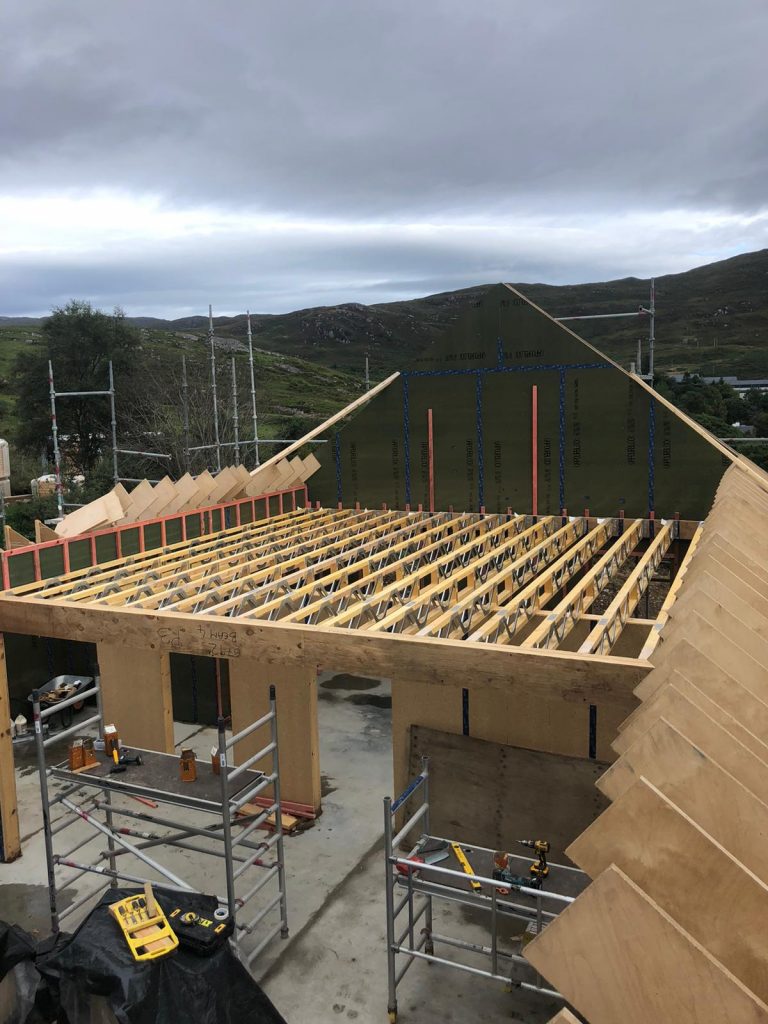
Alongside the woodfibre being put on, the mezzanine floor and then main beams and roof structure started to be built, so protection from the elements was inching closer.
And just as well. It had to happen, but the prolonged dry spell over the summer – apparently the driest in the Highlands for more than 40 years – really did come to an end with a vengeance.
On the days when the rain poured down, I of course trusted our builders that all would be fine and everything would dry out. Indeed, when there was a dry windy day, it was amazing to see how true that was – there perhaps just weren’t quite enough of those dry windy days for me to totally relax.
Can’t say that I enjoyed lying in bed in the caravan, with the rain absolutely pouring down and the wind howling, knowing that our house was getting absolutely soaked. But I kept sweeping out the water morning and evening when I was there, and the builders persevered – as Steve Faryma told me: you have gills in your neck if you grow up in Fort William.
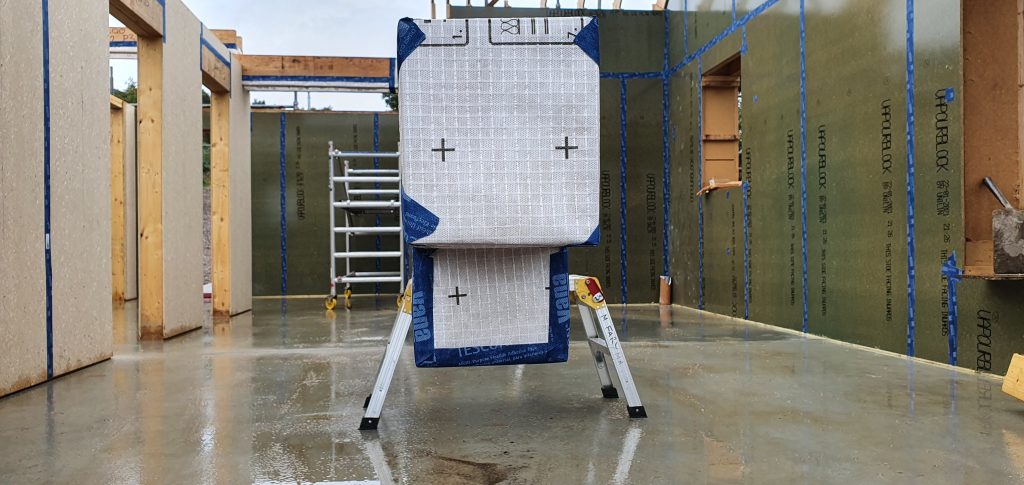
end of beam, wrapped in airtight Intello membrane 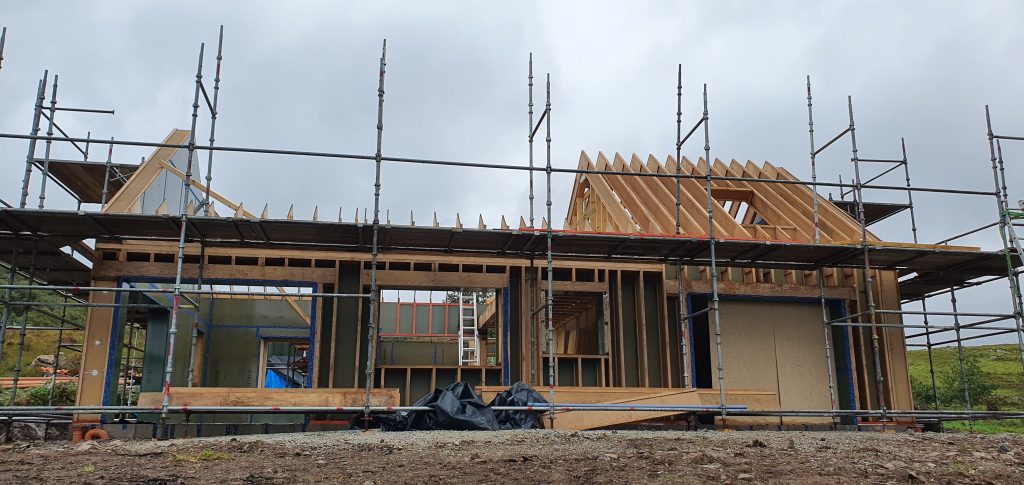
In the above photo, you can see one end of one of the large cross beams wrapped in white Intello membrane, and then taped. This membrane gets wrapped around the end that slots into the outside wall through the airtight Duralis board layer. The membrane is then taped to the Duralis board to ensure that there is both no break in the airtight layer and also to eliminate any thermal bridging with the beam.